
At a Glance
- Setting science-based targets involves a five-step process
- The Science Based Targets initiative (SBTi) validates corporate emissions reduction targets against the latest climate science.
- Targets must cover Scope 1, 2, and relevant Scope 3 greenhouse gas emissions to be considered comprehensive.
- The SBTi recognizes near-term, long-term, and net-zero targets to guide your company’s decarbonization journey.
- Key validation criteria now require a 1.5°C alignment for Scope 1 and 2, plus mandatory revalidation every five years.
Introduction
Taking meaningful climate action requires more than just good intentions. It demands a clear, credible, and measurable plan to address the climate crisis. For organizations looking to make a genuine impact, setting science-based targets provides a structured pathway to reduce greenhouse gas emissions in line with what the planet needs.
This guide offers a practical approach to navigating the SBTi process, from initial commitment to public disclosure, empowering you to build a resilient and future-ready climate strategy. The SBTi, or Science Based Targets initiative, is driven by a collaboration of major organizations including the United Nations Global Compact, World Resources Institute (WRI), and the World Wide Fund for Nature (WWF), who together set the standard for credible climate action.
Understanding Science-Based Targets (SBTi)
Science-based targets are emissions reduction targets adopted by companies to align their operations with the latest climate science. These goals ensure your efforts contribute effectively to limiting global warming to 1.5°C above pre-industrial levels, as outlined in the Paris Agreement goals.
The Science Based Targets initiative (SBTi) is the governing body that defines and promotes best practices in this area for companies and financial institutions. It provides the frameworks, tools, and validation needed to ensure your targets are ambitious and credible. We will explore the initiative and the different types of targets it recognizes.
What are science-based targets, and why should companies set them?
Science-based targets (SBTs) provide companies with a clear framework to set targets for reducing greenhouse gas emissions in line with climate science. Setting SBTs demonstrates corporate accountability, helps mitigate climate risks, and fosters sustainable practices that attract investors and customers committed to environmental responsibility.
Preparing for the SBTi Target Setting Process
Before you officially commit to the SBTi, thorough preparation is essential. This foundational phase involves understanding the requirements, gathering the necessary data, and building internal alignment around your climate ambitions. A well-prepared start streamlines the entire process, from development to validation.
Your initial focus should be on creating a comprehensive inventory of your greenhouse gas emissions and reviewing the latest SBTi criteria. This ensures your emissions data is accurate and that you understand the expectations for target-setting based on current climate science. Let’s look at why this preparation matters and what it entails.
Why Science-Based Targets Matter for Organizations
Adopting science-based targets provides your organization with a clear competitive advantage. It demonstrates a credible commitment to climate action, enhancing your brand’s reputation among consumers, investors, and employees who increasingly prioritize sustainability. This level of commitment can differentiate you within the private sector.
Furthermore, setting these targets can improve financial performance. The process often reveals operational inefficiencies, leading to cost savings through reduced energy consumption and resource use. It also positions your company to better manage risks associated with climate change, such as new regulations and shifting market demands.
Ultimately, integrating science-based targets into your strategy prepares your business for a low-carbon future. It ensures your long-term goals are aligned with global efforts to combat climate change, making your organization more resilient and appealing to stakeholders who track progress through sustainability reports and other disclosures.
Reviewing SBTi Requirements for Companies
To ensure your targets are approved, you must meet the specific SBTi standards. These validation criteria, including SBTi’s validation services, are designed to confirm that your goals are ambitious, time-bound, and aligned with a 1.5°C warming scenario. Familiarizing yourself with these rules is a non-negotiable step in the process.
The SBTi’s criteria cover several key areas.
Your targets must:
- Align with a 1.5°C Pathway: For Scope 1 and 2 emissions, your reduction goals must be consistent with the trajectory needed to limit global warming to 1.5°C.
- Include Scope 3: If your Scope 3 emissions account for 40% or more of your total emissions, you must set a target for them.
- Have a Clear Timeframe: Targets must have a defined base year and target year, typically 5-10 years in the future for near-term goals.
- Be Publicly Disclosed: Upon validation, your targets will be published on the SBTi website.
Meeting these criteria ensures your planned emissions reductions are scientifically robust and transparent. The validation process is rigorous, so careful review of all requirements is critical for a successful submission.
Gathering Essential Emissions and ESG Data
The foundation of any credible science-based target is a comprehensive inventory of your greenhouse gas emissions. You cannot manage what you do not measure. This requires collecting high-quality ESG data across your entire value chain, following the standards set by the Greenhouse Gas (GHG) Protocol.
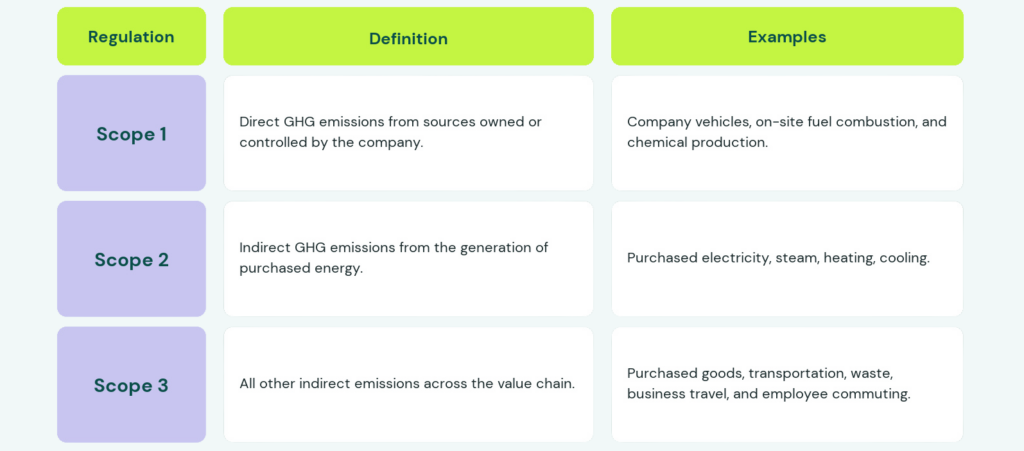
This process involves categorizing your emissions into three distinct scopes. Each scope represents a different source of emissions related to your company’s activities, and the SBTi services team will expect a clear accounting for each.
Understanding these categories is essential for accurate inventory.
Meeting SBTi Target Requirements and Validation Criteria
The SBTi validation process is rigorous for a reason: it ensures that corporate emissions reduction targets are genuinely aligned with the scale of action needed to address climate change. Understanding the latest requirements is essential for a smooth and successful approval of your goals.
Navigating the SBTi criteria involves paying close attention to details like scope coverage, ambition level, target type, and timelines. As the standards evolve, staying current with the latest updates ensures your targets are not only approved but also remain credible and effective. Let’s review the current requirements and best practices.
Latest SBTi Target Requirements and Updates
The SBTi periodically updates its standards to reflect the latest climate science. The current version of the SBTi criteria has raised the bar for corporate ambition, including the absolute contraction approach, making the validation process more stringent than before. Companies setting or updating targets now must adhere to these enhanced requirements.
Some of the most significant recent updates include:
- 1.5°C as the Minimum Ambition: All new Scope 1 and 2 targets must align with a 1.5°C pathway. Targets aligned with 2°C or well-below 2°C are no longer accepted for new submissions, although existing ones remain valid until their next update.
- Mandatory Target Review: Companies are now required to review, and if necessary, recalculate their targets every five years to ensure they remain aligned with the latest science and SBTi criteria.
These changes are reflected in the SBTi Criteria Assessment Indicators, which provide the detailed metrics used during validation. If you have existing targets, you may need to submit an update request to align with the new, more ambitious standards.
Validation Criteria and Best Practices for Approval
To ensure a successful validation, your submission must be complete and well-documented. Following best practices can help you avoid common pitfalls and streamline the approval process. This includes providing a clear and justifiable base year, setting an appropriate target year (5-10 years for near-term targets), and demonstrating a clear understanding of your emissions footprint.
A crucial new requirement for many companies is the development of a climate transition plan. This plan must outline the specific actions, investments, and governance structures you will put in place to achieve your targets. It’s no longer enough to set a goal; you must now show how you intend to reach it.
By proactively addressing all validation criteria and building a robust transition plan, you significantly increase your chances of a first-time approval. This demonstrates to the validation team that your organization has a credible and actionable strategy for decarbonization, not just an aspirational one.
How to Set Science-Based Targets (The Practical Framework)
Establishing science-based targets requires a structured approach that begins with assessing your organization’s greenhouse gas emissions profile. Companies must evaluate their base year and define target years while utilizing the latest climate science to inform their emissions reduction goals. Engaging stakeholders across the value chain enhances the validity and acceptance of targets. Regular monitoring of progress through tools like the SBTi dashboard ensures alignment with global warming limits, fostering corporate climate action and demonstrating transparent sustainability efforts to stakeholders.
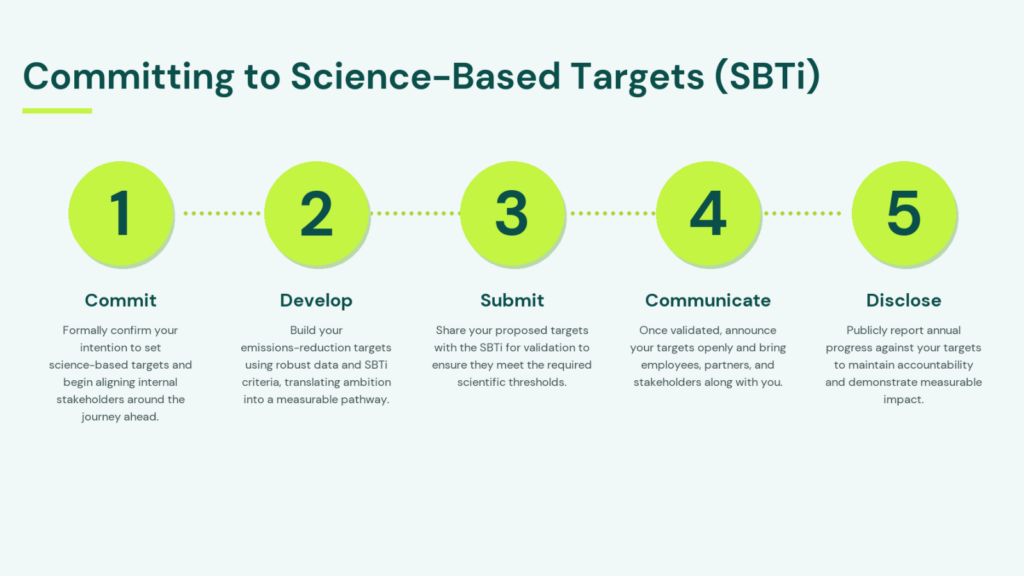
The Steps at a Glance
Establishing science-based targets starts with a clear commitment to aligning your organization’s climate action with global standards. There is a process that can be followed:
- Commit
- Develop
- Submit
- Communicate
- Disclose & Engage
Common Challenges and Practical Solutions in SBTi Target Setting
While setting science-based targets is a powerful step, the process is not without its challenges. Many companies encounter hurdles related to data collection, particularly for Scope 3 emissions, and struggle with the complexities of long-term strategic planning for climate change.
However, these obstacles are surmountable with the right approach. By anticipating common issues and implementing practical solutions, you can navigate the process more effectively. Let’s explore some of these challenges and how to overcome them, focusing on data and target maintenance.
Overcoming Data Collection and Scope 3 Prioritization Challenges
One of the biggest hurdles in setting SBTs is calculating Scope 3 emissions. This category includes all indirect emissions from your supply chain, which can be vast and difficult to track. Gathering accurate data from hundreds or thousands of suppliers requires a systematic approach.
To tackle this, focus on prioritization and engagement. You don’t need perfect data from every source to start. Instead, concentrate on the most significant emissions categories and work directly with your key suppliers to improve data quality over time. Treating some of this information as commercially sensitive data is understood by the SBTi, which allows for a more accurate assessment of a company.
Here are some practical steps to manage Scope 3 challenges:
- Use industry averages and emissions factors as initial estimates.
- Prioritize engaging with suppliers that represent the largest portion of your upstream emissions.
- Provide suppliers with resources and support to help them calculate their own emissions.
- Establish clear requirements for data sharing in your procurement policies.
- Regularly submit a data update request as you refine your measurements.
Best Practices for Keeping Targets Updated and Effective
Setting a target is just the beginning. To ensure its effectiveness, you must establish a system for ongoing monitoring and improvement. Your science-based targets should be living goals that evolve with your business and the latest climate science, not a “set it and forget it” exercise.
A key best practice is to conduct an annual review of your progress. This involves tracking your emissions, comparing them against your target trajectory, and identifying any deviations. This regular check-in allows you to make timely adjustments to your climate action plan and ensure you remain on track.
Beyond the annual review, the SBTi mandates that companies re-evaluate and, if necessary, resubmit their targets for target validation every five years. This process of continuous improvement ensures your goals remain ambitious and relevant. Using a target dashboard can help visualize progress and facilitate these reviews, keeping your commitments at the forefront of your corporate strategy.
Tracking Progress with SBTi Dashboards and Documentation
Once your targets are set, tracking your performance is crucial. The SBTi provides tools to help with monitoring and transparency, most notably the public Target Dashboard. This resource allows companies, investors, and the public to view and track corporate commitments and progress on emissions reductions, including the exact time of publication when updates are made.
This dashboard is more than just a list; it is a dynamic tool for accountability. By making information public, the SBTi services team encourages companies to maintain momentum and report on their progress annually, especially during the period between late December and early January. Let’s examine how you can use this tool and what a good review process looks like.
Using the SBTi Dashboard for Monitoring Targets
The SBTi Target Dashboard is a centralized, public database that lists every company with a committed or validated science-based target. This powerful tool provides transparency and allows anyone to see your organization’s commitments, making it essential for accountability. The dashboard is updated weekly, ensuring the information is current, and publication of new targets pauses at the end of each calendar year, usually between late December and early January.
You can use the dashboard for several monitoring purposes:
- Verify Your Status: Confirm that your company’s status (“Committed” or “Targets Set”) and target details are displayed correctly.
- Benchmark Against Peers: Filter by sector, region, or temperature alignment to see how your targets compare to others in your industry.
- Track the Ecosystem: Observe the growing number of companies committing to science-based targets, reinforcing the business case for climate action.
This resource is fundamental for tracking the collective progress of corporate climate commitments. It serves as the primary source of truth for your validated targets and is a key part of the SBTi’s framework for driving widespread emissions reductions.
Annual Review and Continuous Improvement Recommendations
Effective target management relies on a cycle of annual review and continuous improvement. Your organization should establish a formal process to assess performance against your targets each year, typically after the end of each calendar year when full emissions data is available.
This annual review should involve more than just data collection. It is an opportunity to analyze what worked, what didn’t, and why. Did you meet your interim goals for emissions reductions? If not, what barriers did you encounter? Use these insights to refine your climate action plan for the following year.
This commitment to continuous improvement is vital for long-term success. It ensures your strategy remains adaptive and effective, helping you stay on track toward your target year. Furthermore, it prepares you for the mandatory five-year target revalidation, making the process smoother and more predictable.

Examples and Inspiration: Approved SBTi Targets in the Netherlands
Looking at real-world examples can provide both inspiration and practical insights for your own target-setting journey. Companies in the Netherlands and across Europe are increasingly adopting science-based targets, demonstrating leadership in corporate climate action. Their approved targets offer a blueprint for what a credible commitment looks like.
Examining these case studies can help you understand how different organizations have approached their climate strategies. By learning from their successes, you can gain a clearer picture of how to develop and implement your own effective emissions reduction goals.
Case Studies of Dutch Companies Leading in SBTi Implementation
Companies across the Netherlands are actively engaging with the SBTi to formalize their climate commitments. These organizations serve as powerful case studies, demonstrating how businesses in various sectors can set and pursue ambitious emissions reduction goals.
One such example is 2 Sisters Storteboom B.V., a Netherlands-based company in the food production sector. According to the SBTi dashboard, the company has officially committed to setting both near-term and net-zero targets. This public commitment signals its intent to align its operations with a 1.5°C future, covering its entire value chain.
While 2 Sisters Storteboom B.V. is currently in the “committed” phase, its journey highlights the first crucial step many Dutch and European companies are taking. Other examples found on the SBTi dashboard show companies with approved SBTi targets that have committed to:
- Reducing absolute Scope 1 and 2 emissions by over 40% by 2030.
- Sourcing 100% renewable electricity.
- Reducing Scope 3 emissions from their value chain.
Insights from Successful Corporate Climate Strategies
Analyzing successful corporate climate strategies reveals several common themes. First and foremost, leadership buy-in is critical. When senior executives champion climate action, it cascades throughout the organization, unlocking the resources and cross-functional collaboration needed to achieve ambitious goals.
Another key insight is the importance of integrating climate strategies into core business operations. The most successful companies don’t treat sustainability as a separate department. Instead, they embed climate considerations into procurement, product design, and financial planning, turning their targets into a driver of innovation and efficiency.
Finally, these companies leverage the guidance documents and frameworks provided by the SBTi to build robust and credible plans. They don’t reinvent the wheel but instead use established methodologies to address climate change. This ensures their corporate climate action is grounded in science and aligned with global best practices.
Conclusion
In conclusion, setting science-based targets is not just a regulatory checkbox; it’s a strategic move that empowers organizations and business leaders to align with global climate goals. By understanding the SBTi framework and following the structured target-setting process, companies can effectively reduce their greenhouse gas emissions while boosting their credibility among stakeholders. Remember, the journey doesn’t end once you set your targets; continuous monitoring and adaptation are crucial for long-term success. Embrace this transformative approach to achieve sustainability and drive meaningful change in your organization. To get personalized guidance on implementing these principles, don’t hesitate to book a free consultation with our experts today.

