
At a Glance
What are interim sustainability consultants? They are specialized ESG professionals who embed themselves in your team temporarily to deliver immediate expertise without long-term hiring commitments.
Key benefits:
- Can start within days, not months
- Access specialist expertise on demand
- Cost-effective vs traditional consultancies
- Flexible engagement (part-time/full-time)
When to hire an ESG consultant:
- Racing against ESG deadlines
- Understaffed or capability gaps
- Launching new sustainability initiatives
- Need for deep-dive assessments
Typical costs: £400-2,000 per day, depending on the expertise level
Common deliverables: ESG strategy, sustainability reports, gap analyses, KPI frameworks, training programs
Table of Contents
- What is an Interim Sustainability Consultant?
- Key Services and Responsibilities
- When to Hire an Interim Sustainability Consultant
- Benefits of Interim vs Full-Time ESG Hiring
- How to Find and Hire the Right Consultant
- Working Successfully with Interim Sustainability Experts
- Cost Comparison: Interim vs Traditional Consultancies
Introduction
Sustainability has become a strategic business imperative in 2025. With growing pressure from stakeholders, rising internal ambitions, and an increasing number of regulations on the horizon, companies are expected to act, and fast. However, building an in-house ESG team takes time, money, and strategic clarity, which many organizations don’t have.
Enter interim sustainability/ESG consultants: the agile solution that bridges the gap between ambition and action. These specialized professionals deliver immediate ESG expertise without the long-term commitment of permanent hires or the high costs of traditional consulting firms.
What is an Interim Sustainability Consultant?
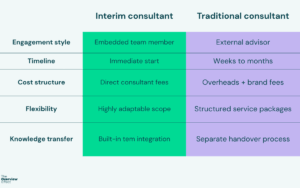
An interim sustainability consultant is a specialized ESG professional who provides temporary, hands-on expertise to organizations needing immediate sustainability support. Unlike traditional consultants who typically advise from the sidelines, interim consultants embed themselves directly into your team to drive projects forward.
Key Characteristics:
- Immediate availability: Can start within days, not months
- Embedded approach: Work as part of your internal team
- Project-focused: Deliver specific outcomes within defined timeframes
- Flexible engagement: Part-time or full-time arrangements available
- Expertise-driven: Bring specialized knowledge in ESG frameworks, regulations, and best practices
What Makes Them Different from Traditional ESG Consultants?
Key Services and Responsibilities
Interim sustainability consultants tackle the full spectrum of ESG challenges that modern businesses face:
Strategic ESG Development
- Sustainability strategy creation: Aligning ESG goals with business objectives
- Materiality assessments: Identifying your most significant sustainability impacts
- Target setting: Establishing science-based targets and KPIs
- Climate transition planning: Developing credible climate transition plans aligned with net-zero commitments
- ESG integration: Embedding sustainability into core business operations
Regulatory Compliance & Reporting
- ESG reporting frameworks: GRI, TCFD, and other sustainability reporting standards
- Regulatory compliance: Staying ahead of evolving ESG regulations
- Supply chain due diligence: EUDR compliance and other regulatory requirements
- Sustainability disclosure: Meeting stakeholder and investor expectations
Operational Implementation
- Gap analyses: Current state assessment and improvement roadmaps
- Data systems setup: ESG data collection for CDP reporting and management processes
- Stakeholder engagement: Investor, customer, and employee communication strategies
- Training programs: Building internal ESG capability and awareness
Specialized Projects
- Life cycle assessments (LCA): Product and service environmental impact analysis
- Carbon footprinting: Scope 1, 2, and 3 emissions calculations
- Biodiversity assessments: Nature-related risk and impact evaluations
- Circular economy initiatives: Waste reduction and resource efficiency projects
When to Hire an Interim Sustainability Consultant
Timing is crucial when bringing in external ESG expertise.
Here are the most common scenarios where interim sustainability consultants deliver maximum value:
1. Urgent Regulatory Deadlines
The Challenge: You may have ESG reports due, a B Corp audit approaching, or new regulations requiring immediate compliance.
The Solution: Interim consultants can mobilize quickly to meet time-sensitive ESG requirements without overwhelming internal teams.
2. Capacity Constraints
The Challenge: Your sustainability lead has left, or your current team lacks bandwidth for critical projects.
The Solution: Fill capability gaps immediately while you recruit permanent staff or during peak demand periods.
3. Specialized Expertise Needs
The Challenge: Complex regulations, technical assessments, or industry-specific ESG requirements beyond internal capabilities.
The Solution: Access deep, specialized knowledge for specific projects without long-term hiring commitments.
4. Major ESG Initiatives Launch
The Challenge: Rolling out climate strategies, implementing new sustainability frameworks, or launching company-wide ESG programs.
The Solution: Experienced project leadership to ensure successful implementation and adoption.
5. Organizational Transitions
The Challenge: Mergers, acquisitions, geographic expansion, or major operational changes affecting ESG strategy.
The Solution: Objective expertise to navigate complex transitions while maintaining sustainability momentum and keeping ESG on the leadership agenda during periods of change.
Benefits of Interim vs Full-Time ESG Hiring
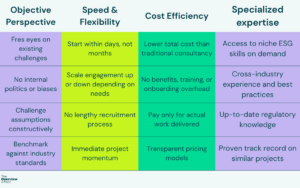
Understanding when to choose interim support over permanent hiring can significantly impact your sustainability program’s success and cost-effectiveness.
Advantages of Interim Sustainability Consultants
When Full-Time Hiring Makes More Sense
Consider permanent ESG staff when you have:
- Long-term strategic initiatives requiring sustained focus
- Ongoing operational responsibilities that need continuous oversight
- Sufficient budget for competitive ESG talent
- Clear internal career development pathways for sustainability professionals
How to Find and Hire the Right Consultant
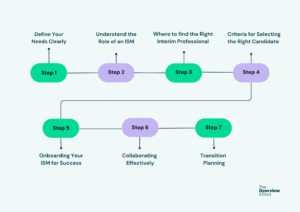
Successfully hiring an interim sustainability consultant requires preparation and the right approach. Follow these steps to ensure you find the perfect fit:
Step 1: Define Your Requirements
Before searching, clarify exactly what you need. Understanding your ESG and sustainability priorities will help you target the right expertise for your specific challenges.
Project Scope
- What specific problem needs solving?
- What deliverables do you expect?
- What’s the timeline and budget range?
- Is this part-time or full-time work?
Essential Skills
- Which ESG frameworks (GRI, TCFD, etc.) are relevant?
- Do you need industry-specific experience?
- Are technical skills (LCA, carbon accounting) required?
- What level of seniority is appropriate?
Success Criteria
- How will you measure project success?
- What internal stakeholders need to be involved?
- Are there specific compliance requirements?
Step 2: Choose the Right Sourcing Channel
Different service providers serve different needs:
Specialized in sustainability
- The Overview Effect: Full-service consultancy with embedded freelancer collective. You pay for the actual consulting work (strategy, assessments, interim roles). They are vetted sustainability experts with an embedded approach.
- Freelancer matchmaking platforms: Marketplace-style access to vetted freelancers, often self-service with limited strategic input. You pay a matchmaking fee to connect with suitable freelancers
- Traditional consultancies: High-end, process-driven consulting with branded methodologies and large teams
Best for: The Overview Effect is best when you want tailored support and strategic thinking with internal capability building at lower cost; freelancer platforms when you have well-defined projects needing fast, tactical support; traditional consultancies when you have large budgets and prefer brand-name firms
Additional Resources: For more insights on sustainability tooling and regulatory compliance, explore specialized industry resources.
General Freelance Platforms
- Upwork: Large talent pool with varied experience levels
- LinkedIn ProFinder: Professional network-based matching
- Freelancer: Project-based marketplace
Best for: Specific deliverables with clear scope and requirements
Professional Networks
- Industry associations (WBCSD, MVO Nederland, local sustainability groups)
- Alumni networks and professional contacts
- Referrals from colleagues and partners
Best for: Finding trusted experts with proven track records
Step 3: Evaluate Candidates Effectively
Review Portfolio and Case Studies
Look for:
- Relevant industry experience
- Similar project types and scales
- Measurable outcomes and impact
- Client testimonials
- References
Assess Technical Competence
- Familiarity with required frameworks and regulations
- Understanding of your industry’s ESG challenges
- Ability to explain complex concepts clearly
- Up-to-date knowledge of evolving standards
Evaluate Soft Skills
- Communication style and cultural fit
- Ability to work independently
- Stakeholder management experience
- Adaptability and problem-solving approach
Step 4: Structure the Engagement
Clear Scope Definition
- Detailed project description and objectives
- Specific deliverables and quality standards
- Timeline with key milestones
- Budget and payment terms
Working Arrangements
- Communication frequency and methods
- Access to systems, data, and team members
- Reporting structure and accountability
- Intellectual property and confidentiality agreements
Working Successfully with Interim Sustainability Experts
Getting maximum value from your interim consultant requires active collaboration and clear processes:
Setting Up for Success
Comprehensive Onboarding
- Provide full context about your business and sustainability challenges
- Share relevant documents, data, and previous work
- Introduce key stakeholders and team members
- Explain the company culture and decision-making processes
Clear Communication Protocols
- Establish regular check-in schedules (weekly minimum)
- Define preferred communication channels
- Set expectations for updates and reporting
- Create shared workspaces and document repositories
Managing the Relationship
Focus on Practical Outcomes
- Prioritize deliverables that drive immediate value
- Avoid getting stuck in endless strategic discussions
- Ensure work aligns with business priorities
- Track progress against agreed milestones
Enable Knowledge Transfer
- Document processes and learnings as work progresses
- Include internal team members in key activities
- Plan for handover from day one
- Build internal capability alongside project delivery
Maintain Flexibility
- Be open to scope adjustments based on findings
- Allow the consultant to challenge assumptions
- Adapt timeline if priorities shift
- Leverage the consultant’s external perspective
Planning for Transition
Handover Preparation
- Document all processes and recommendations
- Train internal team members on new systems
- Create ongoing maintenance plans
- Establish performance monitoring approaches
Cost Comparison: Interim vs Traditional Consultancies
Understanding the financial implications helps make informed decisions about ESG expertise.
Typical Cost Ranges (2025)
Interim Sustainability Consultants
- Junior level: €400-600 per day
- Mid-level: €600-900 per day
- Senior level: €900-1,500 per day
- Specialist expertise: €1,200-2,000 per day
Traditional ESG Consultancies
- Boutique firms: €1,000-2,500 per day
- Mid-tier firms: €2,000-4,000 per day
- Big Four: €3,000-6,000+ per day
- Plus project management fees, overheads, and travel costs
Total Cost Considerations
Interim Consultant Advantages
- No agency markups or overheads
- Transparent daily/hourly rates
- A direct relationship reduces communication costs
- Faster delivery reduces total project cost
When Traditional Consultancies Make Sense
- Large-scale transformations requiring multiple specialists
- High-stakes projects needing institutional backing
- Board-level presentations requiring consultancy brand recognition
- Complex projects requiring specialized tools and methodologies
The Typical Interim Sustainability Consultant Process
Most interim engagements follow a structured approach to maximize impact:
Phase 1: Discovery and Baseline (Weeks 1-2)
- Current state assessment: Review existing sustainability efforts, data, and reporting
- Stakeholder mapping: Identify key internal and external stakeholders
- Gap analysis: Compare current position against best practices and requirements
- Priority setting: Align on the most critical areas for immediate focus
Phase 2: Strategy and Planning (Weeks 2-4)
- Goal alignment: Define clear sustainability objectives linked to business strategy
- Roadmap development: Create actionable plans with timelines and responsibilities
- KPI framework: Establish meaningful metrics and monitoring systems
- Resource planning: Identify budget, skills, and system requirements
Phase 3: Implementation and Delivery (Weeks 4-12+)
- Project execution: Deliver specific initiatives (reporting, strategy, training)
- System building: Establish processes aligned with standards like ISO 14001 for ongoing sustainability management
- Team development: Transfer knowledge and build internal capabilities
- Progress monitoring: Track delivery against objectives and adjust as needed
Phase 4: Handover and Continuity (Final 2-4 weeks)
- Documentation: Comprehensive records of all work and recommendations
- Knowledge transfer: Train internal teams on new processes and systems
- Future planning: Recommendations for ongoing development and next steps
- Performance framework: Metrics and monitoring for continued success
Conclusion: Accelerating Your Sustainability Journey
The sustainability landscape is evolving rapidly, with new regulations, stakeholder expectations, and business opportunities emerging constantly. Organizations that can adapt quickly while maintaining quality execution will gain significant competitive advantages.
Interim sustainability consultants offer a strategic solution to this challenge: immediate access to specialized expertise without the delays and costs of traditional approaches. Whether you’re facing urgent compliance deadlines, launching new ESG initiatives, or building internal capabilities, the right interim consultant can accelerate your progress significantly.
Key Success Factors:
- Clear scope definition from the outset
- Active collaboration throughout the engagement
- Focus on practical outcomes that drive business value
- Knowledge transfer planning for long-term success
The most successful organizations view interim sustainability consulting not just as gap-filling, but as a strategic investment in their ESG capabilities. Done well, these engagements deliver immediate results and build the foundation for sustained sustainability leadership.
Looking for specialized ESG expertise for your organization? Consider how interim sustainability consultants can accelerate your sustainability journey while building internal capabilities for long-term success.
Ready to explore interim sustainability support? Define your specific needs, research potential partners and candidates, and start with a clear project scope. The right interim consultant can transform your ESG ambitions into measurable business results.

